

Happy New Year!
For many of us, bidding farewell to 2020 couldn't come soon enough. And while the simple flipping of a calendar page won't solve all the issues we faced last year, the new year serves as a milestone for us to reflect, take stock, and plan ahead. In the context of digital legal marketing, while much has changed, much will continue to remain the same. Lawyers who deploy technology to communicate value and solidify relationships will win.
While there have been a few tectonic shifts in how and from where we work, the game remains largely the same: design and deliver great experiences for clients and everyone else who comes into contact with your practice. In fact, in most ways I can think of, the change brought by 2020 was mostly an acceleration of the trends we've been witnessing, well, over the last decade or so. In fact, my best legal marketing tip is the same as it was in 2013: Be authentic. With that said, here are a few digital legal marketing topics to pay particular attention to in 2021.
“In preparing for battle, I have always found that plans are useless, but planning is indispensable.”
–General Dwight D. Eisenhower
According to the ABA TechReport 2020 Survey covering websites and lawyer marketing, less than half of law firms of all sizes have a marketing budget. My suspicion is that the numbers are at least somewhat comparable for marketing plans (since budgets should include time, personally I don't see how you can have one without the other).
If you do absolutely nothing else this year from a marketing standpoint, go through the exercise of creating a budget and plan. Even if you aren't going to spend any time or money on marketing, the exercise itself will likely help you better understand the business of your practice, or at the very least, identify issues that impede your ability to deliver great client and potential client experiences.
While I'd love nothing more than to deliver a complete one-year digital legal marketing plan and budget for your practice, without a lot more information about you, your practice, and your business objectives, that would be irresponsible. However, I can share with you some questions that usually get folks headed in the right direction:
Who is your target client? Where are they? What motivates them? How do they think and what do they want? How do they search for answers and expertise from lawyers like you? Where do they spend time both online and offline? Can you create a list of clients that fit the profile? Can everyone at your firm do the same?
What makes you and your practice uniquely qualified to help them? What can you do that is truly better than all (at least most) of your competitors? Don't limit your answers solely to years of experience. Identify all of the ways you can deliver remarkable experiences (i.e. service, technology, systems, etc).
Are you delivering consistent client-centric experiences? How do you know? What processes do you have in place to deliver noteworthy experiences predictably? Is everyone at your firm acutely aware these processes and following them?
What can you promise that you can deliver every single time? Hint: It's not an outcome. Maybe it's speed of response. Maybe it's a promise to keep them informed throughout the process. Maybe it's as simple as promising to treat them with respect and dignity. Whatever you decide, make sure it's a promise that you can guarantee.
What role(s) do you play at your firm? All of them? Lawyer-only? Rainmaker? The amount of time you spend on these activities should reflect your roles.
Once you have clearly defined and documented answers to these questions, review everything you and your team does through your answers. If it's not aligned, stop doing (or paying for) it.
Law remains a reputation and relationships business. Love it, hate it, or feel indifferent about it, face-to-face professional networking has been a cornerstone of client development for as long as anyone reading this can remember. Until last year...
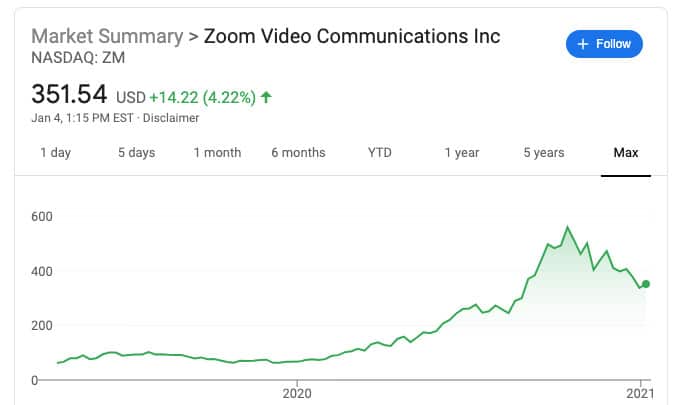
We've traded our disdain for in-person networking events for the dread of virtual conferences and Zoom fatigue. On the other hand, the friction of rubbing elbows with our professional contacts has gone to zero. So, the annual, semi-annual, quarterly, or monthly networking opportunities have become daily, or even multiple times per day, virtual coffee, cocktails, and even meals.
With the arrival of vaccines, and an optimistic mindset, we are likely to see the return of face-to-face networking sometime in 2021. But like many of our before time behaviors, I anticipate that our expectations around face-to-face networking are forever-changed.
That's not to say that people won't go back to face-to-face networking, I'm certain they will. However, more of us are recognizing the power (and efficiency) of virtual proximity. And while I don't intend to suggest that lawyers can merely "selfie" their way to new clients, you don't have to be a professional digital media analyst to appreciate the value of staying regularly connected and top of mind with an audience that can refer you business and hire you. If you aren't doing so already, I encourage you to make 2021 the year to prioritize virtual networking. Even a few minutes a day can deliver tremendous value in terms of staying connected with the people who can help you grow your practice.
The cluster might be geographic (they eat different potato chips in Tucson than they do in Milwaukee) but they’re much more likely to be psychographic instead. What a group of people believe, who they connect with, what they hope for…
- Seth Godin
In the context of digital legal marketing, finding your clusters online is particularly valuable. Whether it's a Slack community of lawyers, a lawyer-specific private Facebook Group, or more importantly, a group dedicated to Chicagoland food, finding and connecting with people in your "clusters," is among the most effective ways to create, nurture, and solidify authentic relationships that matter. Interested in legal marketing? There are groups for that too.

The future truly is local. Whether it's gathering locally to a place or a passion, make a plan in 2021 to find and engage your clusters online.
While certainly not novel for 2021, integrated digital marketing campaigns tend to outperform those that are, well, not integrated. Per Hubspot:
Integrated marketing is the process of arranging your different marketing channels to work in tandem to promote your products or services, typically through a strategic campaign. Integrated marketing also works to align the primary brand message that’s being delivered through your marketing channels and assets.
- Hubspot
Too many of the marketing questions I read and hear from lawyers go something like this: Who do like for [insert channel] (i.e. SEO, PPC, email, etc)?
While getting referrals and recommendations from people similarly situated to you that you know, like, and trust, is a no-brainer, the question doesn't go deep enough (and you should beware that you're actually asking people you actually know, like, and most importantly trust).
Too often, the response to this question is a specialist in a specific channel. So, what's wrong with that? Nothing at all. Assuming they're actively working and coordinating efforts with the specialists across channels. Typically, they're not. So, the SEO people don't talk to the PPC people. The PPC people don't talk to the email people. In our race to convert clicks to clients, too many are losing the forest for the trees.
The other issue this mindset creates is over-reliance on a single channel. In other words, all your marketing eggs in one basket. This is particularly problematic in SEO. Put simply, there is a lot of flux in search results. Further, search engines regularly make updates that can dramatically impact your visibility.
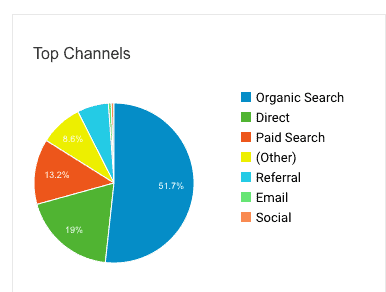
Find ways to diversify your digital marketing plans across channels. Track the percentage of qualified traffic and potential client leads from each Channel. Deploy marketing resources across Channels to mitigate the risk of being a "one Channel pony."
You can't (really) market your way out of a bad reputation. I regularly talk to lawyers who want to "rank #1" but have really negative Google My Business reviews. First, for queries that include semantic information like "best" or "top-rated," Google will sometimes automatically apply a rating filter.
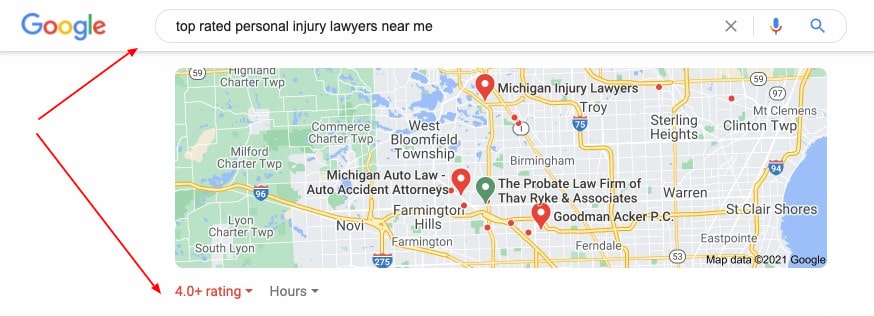
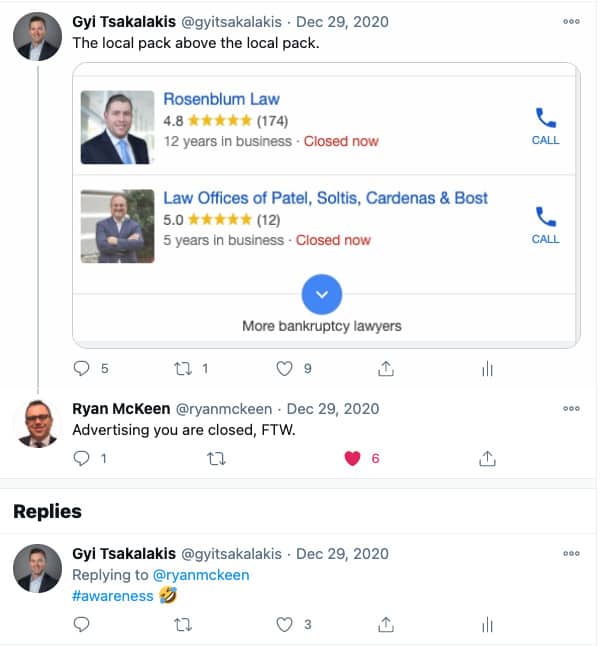
No number of amazing backlinks will help you here. Second, even if you are able to rank, go look at the reviews of the other firms that share visibility in the local pack. Even if you're in the #1 local pack position, you are losing clients to higher-rated firms. It's really that straightforward. Don't spend money publicizing your reputation for poor service. And don't spend money advertising that you're closed (that one drives me nuts).
The time for lawyers to "wonder whether digital marketing works," are over. It's time to take accountability and understand how this stuff works. Your future is likely to depend on it.
To a prosperous 2021! 🎉
Subscribe to The AttorneySync Weekly

Many years ago, when AttorneySync started working with lawyers on intake, something I hadn't (but should have) considered was that many law firms weren't great at delivering exceptional service to potential clients during that crucial first call. Even firms with great reputations for delivering exceptional 𝗢𝗨𝗧𝗖𝗢𝗠𝗘𝗦would lose potential clients because of their poor 𝗘𝗫𝗣𝗘𝗥𝗜𝗘𝗡𝗖𝗘 on […]
If you own or market a personal injury law firm, this question should guide every marketing decision you make. Ideally, it's based on actual data. How have your past clients found you? What do you know about their journeys? Unfortunately, many law firms don't do a great job at collecting this data. If you don't […]
Here's a recent Google SERP for "𝘄𝗵𝗼 𝗮𝗿𝗲 𝘁𝗵𝗲 𝗯𝗲𝘀𝘁 𝗰𝗮𝗿 𝗮𝗰𝗰𝗶𝗱𝗲𝗻𝘁 𝗹𝗮𝘄𝘆𝗲𝗿𝘀 𝗶𝗻 𝗽𝗵𝗶𝗹𝗮𝗱𝗲𝗹𝗽𝗵𝗶𝗮." Ads? ❌LSAs? ❌Local Pack? ❌Links? ❌ 🔷 AI Overview? ✅ 6 firms listed. Only one tiny 🔗. Click the 𝗦𝗵𝗼𝘄 𝗺𝗼𝗿𝗲 button? 𝗬𝗼𝘂 𝗴𝗲𝘁: Here's a more detailed look at some of these firms: THE PEARCE LAW FIRM, P.C.Edith Pearce, […]
On April 22, 2025, Google sent an email updating Local Services Ads Additional Terms for Providers: Subject: Action required: important updates to Local Service Ads Additional Terms Many people are arguing that lawyers cannot participate in Local Services Ads, as this would constitute a per se violation of the Rules of Professional Conduct related to […]
Conrad and I recently joined Zack at Lawyerist to record a conversation about AI and marketing. You might think that we spend the whole time on how lawyers can use AI to publish content. You'd be wrong. While AI can certainly support publishing, there are many more interesting ways to use it in legal marketing. […]
As more legal services consumers turn to ChatGPT for local law firm recommendations, a fascinating intersection between AI, search, and maps unfolds. While Google remains the undisputed leader in local business data, ChatGPT is increasingly becoming an entry point for searchers seeking legal representation. But here’s the kicker: instead of keeping users within its ecosystem, […]
When law firms contact us, they usually want to talk: • PPC Ads • SEO Rankings • Lead Generation Very few want to talk: • Brand • Trust & Recognition • Emotional Connection Admittedly, much of this concerns that AttorneySync is known for lead generation across those common digital channels. But even when we start […]
According to an October 2024 study by SE Ranking: "The legal niche triggers the highest percentage of AIOs (77.67%). The average number of links matched between the AI Overview resources and the top 20 search results was 6.49 for legal topics. AI Overviews for legal topics most frequently link to NYCourts.gov (114 links), YouTube.com (48 […]
I'm grateful for my friend, Charley Mann of Law firm Alchemy. If you're a lawyer, subscribe to his Free Email List. In a recent email, Charley calls out bad guru advice on hiring: "Trying to execute a major SEO improvement? You need to find people who will help you, instead of trying to DIY it […]


